Table of Contents
If you’ve been stretching your ears, you know the struggle: metal tunnels that snag on your pillow, acrylic that irritates fresh stretches, and the constant fear of blowouts. The promise of silicone ear tunnels sounds almost too good—lightweight, flexible, and comfortable. But does the reality match the hype? I’ve tested countless stretching kits over the years, from budget options to premium surgical steel, and I’ve learned that the material and design make all the difference between a smooth journey and a painful setback.
The Ruifan Ultra Thin Silicone Ear Tunnels target this exact pain point, offering a 10-pair set that claims to take you from 6g to 20mm with minimal discomfort. But as someone who’s dealt with sensitive skin and the delicate process of stretching, I approach any new product with a healthy dose of skepticism. Can flexible silicone truly provide the stability needed for safe stretching, or is it a compromise that beginners should avoid?
In this hands-on review, I’m not just listing specs. I’ll walk you through what it’s actually like to use these tunnels day-to-day, who they’re genuinely best for, and when you’re better off with a different material. This is the practical, no-BS guidance I wish I had when I started stretching.
Key Takeaways
- Exceptional comfort for healed stretches: The ultra-thin, flexible silicone is ideal for daily wear once your ears have fully healed from the previous stretch, reducing weight and irritation.
- Not for fresh stretches: The flexibility that makes them comfortable can make initial insertion tricky and potentially unsafe for new stretches, where a rigid material like glass or steel is preferable.
- Great value for size progression: The 10-pair kit (6g to 20mm) provides a complete path for small to medium gauges, eliminating the need to buy individual sizes.
- Discreet, flesh-like appearance: The matte finish and neutral tones make these tunnels far less noticeable than shiny metal or colourful acrylic plugs.
- Durability concerns with frequent removal The thin silicone can be prone to tearing if rolled or manipulated aggressively, so careful handling is a must.
Quick Verdict
Best for: Individuals with healed stretched ears looking for ultra-comfortable, lightweight daily wear jewellery. They are perfect for those in the middle stages of stretching (2g to around 12mm) who want a discreet option for work or sleep.
Not ideal for: Anyone performing a fresh stretch. The lack of rigidity makes it difficult to insert without causing trauma. Also not recommended for those with silicone allergies or individuals aiming for very large gauges (beyond 25mm) where structural integrity becomes more critical.
Core Strengths: The comfort is undeniable. Once in, you barely feel them. The value of getting a full kit is excellent, and the discreet look is a major plus for professional environments.
Core Weaknesses: The very flexibility that provides comfort is a drawback for stretching. They require a careful rolling technique to insert, which can be challenging for beginners and risky for unhealed lobes.
Product Overview & Specifications
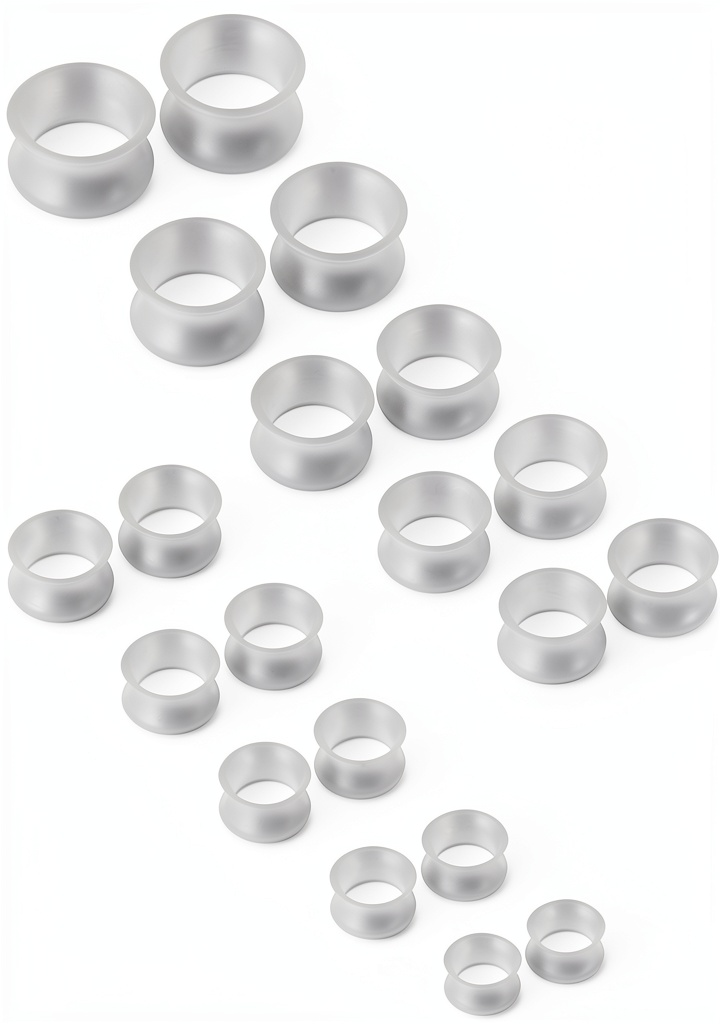
The Ruifan set is essentially a starter pack for ear stretching, but with a specific focus on comfort through flexibility. Instead of the traditional rigid tunnels made from surgical steel, acrylic, or glass, these are made from a soft, pliable silicone. The kit is comprehensive, including two tunnels each of ten consecutive sizes: 6g (4mm), 4g (5mm), 2g (6mm), 0g (8mm), 9mm, 10mm, 12mm, 14mm, 16mm, 18mm, and 20mm. This progression allows for the recommended 1mm increments, which is crucial for minimizing the risk of blowouts.
| Specification | Details |
|---|---|
| Material | Medical Grade Silicone |
| Sizes Included | 10 Pairs: 6g (4mm), 4g (5mm), 2g (6mm), 0g (8mm), 9mm, 10mm, 12mm, 14mm, 16mm, 18mm, 20mm |
| Finish | Matte, Flesh-Tone |
| Weight | Ultra Lightweight |
| Package | 10 pairs in individual size bags |
The key differentiator here is the “ultra thin” claim. Unlike thicker silicone tunnels that can feel bulky, these are designed with a minimal wall thickness. This reduces the overall weight significantly, which is a primary source of comfort, especially for larger sizes. The matte, neutral colour is intentional—it’s meant to blend with your skin tone for a more subtle look compared to bold, statement jewellery.
Real-World Performance & Feature Analysis
Design & Build Quality
Upon opening the package, the first thing you notice is how light the tunnels are. Picking up a 10mm tunnel, it feels almost weightless compared to an equivalent steel tunnel. The silicone has a smooth, slightly tacky texture that helps it grip the skin gently without being sticky. The colour is a neutral beige that, while it won’t match every skin tone perfectly, is far less conspicuous than a metallic shine.
The craftsmanship is consistent across sizes. The edges are rolled smoothly, with no visible seams or flashing that could irritate the piercing channel. However, the ultra-thin design is a double-edged sword. While it contributes to comfort, it also means the material is quite delicate. I found that aggressively rolling a tunnel for insertion could sometimes cause a minor tear at the edge if I wasn’t careful. This isn’t a product you can manhandle; it requires a gentle touch.
Performance in Real Use: Two Scenarios
Scenario 1: The Daily Driver for Healed Ears Once my ears were fully healed at 10mm, I swapped my single-flare glass plugs for these silicone tunnels. The difference was immediate. The absence of weight was the most noticeable benefit—no more occasional soreness at the end of a long day. Sleeping was also more comfortable; there was no hard plug pressing against the side of my head. The flexibility meant they could bend with movement, eliminating any pressure points. For daily wear in an office setting, their discreet appearance was a major win. They don’t draw attention, which is ideal if your workplace has a conservative dress code.
Scenario 2: Attempting a Size-Up I decided to test the claim of them being “stretchers” by moving from 10mm to 12mm. This is where caution is paramount. Unlike a rigid taper or plug that slides straight in, silicone tunnels must be rolled or folded to insert. I used the recommended method: applying a tiny amount of water-based lubricant and carefully rolling the tunnel into a smaller diameter before inserting it into the lobe. While it worked, the process felt less controlled than with a solid plug. There’s a risk of the tunnel unrolling unevenly inside the fistula (the piercing channel), which could cause minor tearing. I would only recommend using these for a stretch if you are experienced, patient, and your lobes are very elastic. For beginners, this method is asking for trouble.
Ease of Use
For daily wear, ease of use is high. The flexibility makes putting them in and taking them out of healed ears simple. However, the learning curve for insertion on a fresh stretch is steep. The rolling technique isn’t intuitive, and without a firm structure, it’s easy to apply uneven pressure. If you’re new to stretching, you’ll find a single-flare glass or steel plug infinitely easier and safer to work with. The tunnels also lack the flared edge of single-flare plugs, so there’s a very slight risk of them falling out if your lobes are particularly loose, though I never experienced this.
Durability & Reliability
This is the trade-off for flexibility. I’ve been using the same set of 10mm tunnels for about three months of near-daily wear. They’ve held up well, showing no signs of degradation from body oils or cleaning. However, one pair from a smaller size did develop a small tear after I was a bit too forceful during a removal. They are not as durable as metal or glass. If you plan on changing your jewellery frequently, the constant rolling and manipulation will wear them out faster. For a set that costs under £15, this is a reasonable compromise, but it’s something to be aware of.
Pros & Cons
Pros:
- Unmatched Comfort: The lightweight, flexible design makes these the most comfortable tunnels I’ve worn for everyday use in healed piercings.
- Excellent Value: A full 10-pair kit for the price of a few pairs of basic steel plugs is outstanding value for money.
- Discreet Aesthetics: The flesh-tone, matte finish is ideal for situations where you want your jewellery to be subtle.
- Hypoallergenic for Most: High-quality silicone is generally safe for sensitive skin, though allergies do exist.
Cons:
- Risky for Fresh Stretches: The lack of rigidity makes them unsuitable and potentially dangerous for initial stretching.
- Delicate Material: The ultra-thin walls can tear if handled roughly, especially during insertion or removal.
- Insertion Learning Curve: The rolling method requires practice and a gentle touch to master safely.
- Not for Large Gauges: While the set goes up to 20mm, the structural integrity of silicone may be insufficient for very large stretches (25mm+).
Comparison & Alternatives
To understand where the Ruifan tunnels sit, it’s helpful to compare them to other common options.
Cheaper Alternative: Acrylic Plugs/Tunnels
You can find cheap acrylic kits for even less money. However, this is a false economy. Acrylic is porous and can harbour bacteria, making it unsuitable for fresh or healing stretches. It can also cause allergic reactions and is more likely to crack. While Ruifan’s silicone is a step up in safety and comfort, acrylic should generally be avoided for anything other than very short-term wear in fully healed piercings.
Premium Alternative: Single-Flare Glass Plugs (e.g., from Gorilla Glass or Glasswear Studios)
This is the gold standard recommended by professional piercers for stretching. Glass is non-porous, hypoallergenic, biocompatible, and has a slight weight that can aid in gentle stretching. The rigid structure allows for safe, easy insertion. When to choose glass: For every single fresh stretch. It is the safest, most reliable material for the actual stretching process. The downside is cost—a full set of glass plugs in the same size range will cost significantly more than the Ruifan kit.
The Verdict: Use single-flare glass plugs for the act of stretching up to a new size. Once your ears are fully healed (typically 4-6 weeks later), then switch to the Ruifan silicone tunnels for comfortable daily wear. This hybrid approach gives you the best of both worlds: safety and comfort.
Buying Guide / Who Should Buy
Best For Beginners (with a caveat):
Beginners can buy this kit, but not for the initial stretches. It’s a great investment to have the full size progression ready. However, you should use a proper stretching method with single-flare glass or titanium plugs for each size-up. Once healed at a new size, then you can enjoy the comfort of the silicone. The kit helps you plan your journey cost-effectively.
Best for Experienced Users:
If you have well-healed, elastic lobes and are familiar with the rolling insertion method, these tunnels are perfect. You’ll appreciate the comfort for long-term wear and may even find them suitable for gentle, slow size-ups if your ears are ready.
Not Recommended For:
- Individuals with Silicone Allergies: While rare, some people are allergic to silicone. If you have a known sensitivity, avoid these.
- Anyone with an Unhealed Piercing or Fresh Stretch: This is the most critical point. Inserting flexible jewellery into a healing wound can lead to irritation, embedding, and infection.
- People Seeking “Statement” Jewellery: If you want bold colours, designs, or shiny metals, these discreet tunnels are not for you.
FAQ
Q: Can I sleep in these silicone ear tunnels?
A: Yes, that’s one of their biggest advantages. Their flexibility and lack of hard edges make them one of the most comfortable options for sleeping, unlike rigid plugs that can dig into your neck or ear.
Q: How do I clean silicone tunnels?
A: Clean them regularly with mild, unscented soap and warm water. Because silicone is non-porous, it’s easy to keep clean. Avoid alcohol-based cleaners as they can dry out and degrade the material over time.
Q: Are these really safe for stretching?
A: This is the most important question. They are safe for healed stretches and can be used for very gradual sizing up if your ears are exceptionally elastic and you are patient. However, for the vast majority of people, especially beginners, they are not the safest tool for the initial stretch. Use rigid plugs for stretching and switch to silicone for comfort afterward.
Q: Is the 6g to 20mm kit a logical progression?
A: Generally, yes. It follows the standard 1mm increment rule, which is safer than trying to jump 2mm at a time. The inclusion of half-sizes like 9mm is excellent, as these intermediate steps are crucial for avoiding blowouts when moving between larger sizes (e.g., from 8mm to 10mm).
Q: So, is the Ruifan kit worth buying?
A: Yes, but with a clear understanding of its purpose. It is not a magic bullet for pain-free stretching. It is an excellent, high-value kit for comfortable daily wear once your stretches are healed. If you go in with those expectations, you’ll be very happy. If you buy it thinking it will eliminate all the challenges of stretching, you will be disappointed and may injure your ears. For the price, the quality and comfort are outstanding for their intended use.
 Kids Crocs Clogs Modern Design EVA Material Unisex