Table of Contents
- Key Takeaways
- Quick Verdict
- Product Overview & Specifications
- Real-World Performance & Feature Analysis
- Design & Build Quality
- Performance in Real Use: Two Scenarios
- Ease of Use
- Durability & Reliability
- Pros & Cons
- Pros
- Cons
- Comparison & Alternatives
- Cheaper Alternative: Basic Stainless Steel Nose Bone
- Premium Alternative: Threadless Labret Stud (e.g., from Neometal or Anatometal)
- Buying Guide / Who Should Buy
- Best For Beginners
- Best For Casual, Everyday Wear
- Not Recommended For
- FAQ
- Is the Ruifan nose stud truly hypoallergenic?
- Will the L-shape really stay in?
- What’s the difference between 18G and 20G?
- Is this worth the price?
You’re searching for a new nose stud, and the options are overwhelming. You want something that looks good, feels secure, and most importantly, won’t irritate your skin. The promise of ‘surgical steel’ and ‘hypoallergenic’ is appealing, but is it just marketing? Having worn countless pieces of body jewellery over the years, I know the reality often differs from the product description. A stud that looks perfect online can be a daily nuisance if it’s poorly designed.
In this hands-on review, I’m putting the Ruifan Surgical Steel L-Shaped Nose Bone Stud under the microscope. We’ll move beyond the specs to see how it performs in real life—from its staying power during a hectic day to the truth about its hypoallergenic claims. My goal is to give you the clear, practical insights you need to decide if this is the right piercing for you, or if you should keep looking.
Key Takeaways
- The L-shape offers a decent balance of security and ease of use, especially for those new to nose piercings, though it may not be as secure as a screw or threadless labret for very active individuals.
- ‘Surgical steel’ is a broad term; while 316L is a good standard, those with known nickel sensitivities should be cautious and consider titanium for absolute peace of mind.
- The 6mm pin length is a versatile choice for most nostril shapes, but if you have particularly thin or thick skin, you might find it slightly too long or short.
- This stud represents solid value for money as a starter piece or a casual, everyday option, but don’t expect the gem setting or finish to rival premium, jeweller-made pieces.
Quick Verdict
Best for: Individuals new to nose piercings, those looking for an affordable and stylish everyday stud, or anyone wanting a low-commitment piece to test a new look.
Not ideal for: People with severe metal allergies (especially to nickel), those with very active lifestyles or jobs where a perfectly secure fit is critical, or anyone seeking a high-end, luxury jewellery piece.
Core Strengths: Easy insertion and removal, comfortable for long-term wear, affordable price point, and a simple, sparkly aesthetic.
Core Weaknesses: The security of the L-bend isn’t foolproof, the quality of the crystal can vary, and the term “surgical steel” may not be sufficient for all sensitive skin types.
Product Overview & Specifications
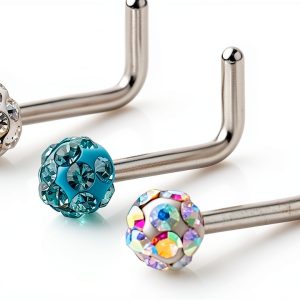
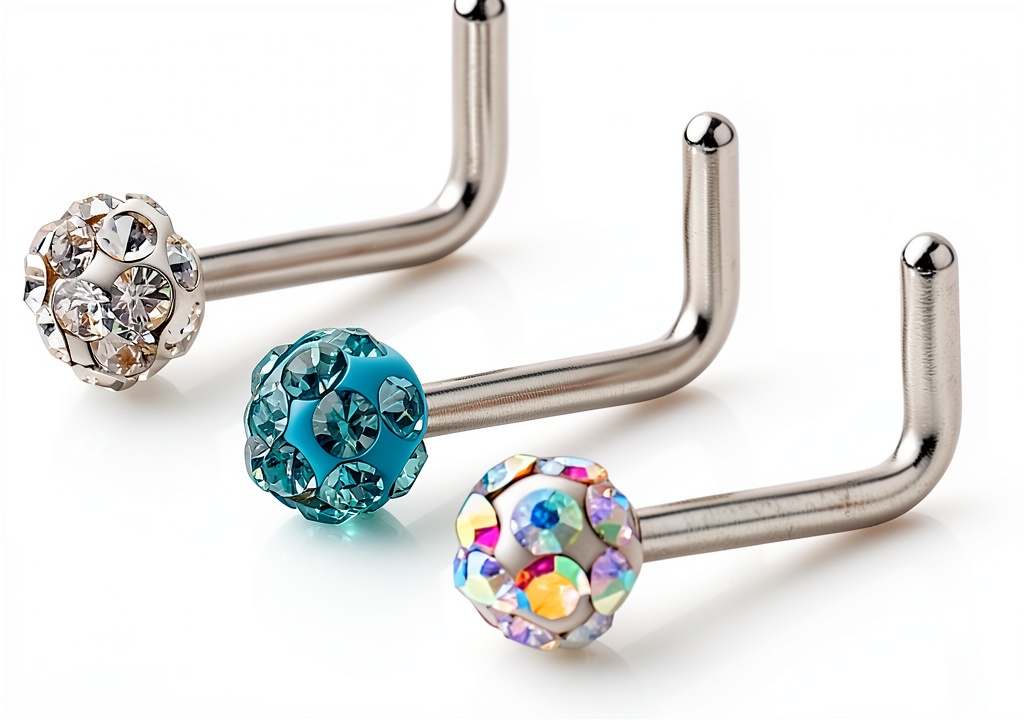
The Ruifan nose stud is a classic L-shaped bone design, a popular choice for its simplicity. The idea is straightforward: a straight post with a 90-degree bend at the end acts as an anchor inside your nostril. It’s designed to be more secure than a straight pin but easier to handle than a corkscrew or a labret stud with a separate backing.
| Specification | Details |
|---|---|
| Material | 316L Surgical Steel |
| Gauge (Thickness) | 18G (1.0mm) – also available in 20G |
| Pin Length | 6mm |
| Top Decoration | 3mm Crystal Gem (Various colours) |
| Style | L-Shaped Bone/Screw |
| Hypoallergenic Claim | Yes (Nickel-Free) |
Real-World Performance & Feature Analysis
Design & Build Quality
Upon first inspection, the stud has a simple, no-frills appearance. The 316L surgical steel has a standard polished finish—it’s shiny and smooth, which is crucial for preventing irritation during insertion. The crystal gem is adequately set, but don’t expect the precision of a Swarovski crystal; it’s a nice touch of sparkle for the price, but under close scrutiny, you can see it’s a more affordable stone. The real test of design is in the L-bend itself. It’s a crisp, clean bend without any sharp edges, which is a positive sign for comfort.
Performance in Real Use: Two Scenarios
Scenario 1: The Office Day. For standard daily activities—working at a desk, running errands, casual socialising—the Ruifan stud performs admirably. It’s lightweight and unobtrusive. The L-shape does its job, staying in place without any fuss. I found myself forgetting it was even there, which is the hallmark of comfortable jewellery. The 6mm length is a good standard; it didn’t protrude excessively inside my nostril.
Scenario 2: The Active Weekend. This is where the limitations of the L-shape become apparent. During a brisk walk that turned into a jog to catch a train, I noticed the stud felt less secure. While it didn’t fall out, there was a definite sensation of movement. I’d be hesitant to wear this for a gym session, a swim, or any activity involving significant jostling. The trade-off for easy use is a slight sacrifice in absolute security.
Ease of Use
This is where the L-shaped bone stud truly shines, especially for beginners. Compared to the fiddly nature of a screw-style stud or the precision required for a threadless labret, inserting this is relatively straightforward. You simply guide the pin in and gently push until the bend follows. Removal is just as easy. This is a significant advantage if you like to change your jewellery frequently or if you’re still building confidence in handling your piercing.
Durability & Reliability
316L surgical steel is a corrosion-resistant material, so you don’t have to worry about it tarnishing from everyday exposure. Over several weeks of continuous wear, the finish held up well with no signs of scratching or wear on the metal. The gem remained secure. However, the potential weak point over the long term is the L-bend itself. Repeated insertion and removal, or accidentally snagging the jewellery, could potentially weaken or alter the angle of the bend, affecting the fit.
Pros & Cons
Pros
- Beginner-Friendly: The L-shape design is one of the easiest types of nose studs to insert and remove yourself.
- Generally Comfortable: The smooth finish and appropriate length make it comfortable for all-day wear without irritation.
- Affordable: Priced accessibly, making it a low-risk option for trying new styles or building a collection.
- Hypoallergenic for Most: 316L steel is suitable for a majority of people with mild metal sensitivities.
Cons
- Moderate Security: Not the most secure option available; can be dislodged by vigorous activity, towels, or clothing.
- ‘Surgical Steel’ Isn’t for Everyone: Those with severe nickel allergies may still react, as 316L contains trace amounts.
- Average Gem Quality: The crystal is decorative but lacks the brilliance and precision cutting of higher-grade stones.
- Bend Can Weaken: The anchor bend may deform over time if handled roughly.
Comparison & Alternatives
To understand the Ruifan stud’s place in the market, it’s helpful to compare it to both budget and premium options.
Cheaper Alternative: Basic Stainless Steel Nose Bone
You can find generic L-shaped nose bones for a few pounds less on marketplaces like eBay or Amazon. The trade-off is significant. These are often made from lower-grade stainless steel, not surgical grade, which dramatically increases the risk of irritation or allergic reaction. The finishing is rougher, and the fit can be inconsistent. Verdict: The small savings aren’t worth the potential skin reaction. The Ruifan’s 316L material is a worthwhile upgrade.
Premium Alternative: Threadless Labret Stud (e.g., from Neometal or Anatometal)
This is the gold standard for secure, comfortable, and high-quality nose jewellery. A threadless labret uses a push-pin mechanism that clicks into a fixed post. It’s infinitely more secure than an L-shape, virtually impossible to lose, and the tops (ends with gems) are interchangeable. They are also typically made from implant-grade titanium (ASTM F136), which is the safest material for sensitive skin. Verdict: The initial cost is much higher (£15-£30+ for a basic setup), but the security, customisation, and material quality are in a different league. Choose this if security and hypoallergenic properties are your top priorities.
Buying Guide / Who Should Buy
Best For Beginners
If you’re new to nose piercings and intimidated by more complex jewellery, this is an excellent starting point. The ease of use reduces the stress of changing your stud for the first time.
Best For Casual, Everyday Wear
For someone who wants a simple, sparkly stud for daily office work or casual social situations, the Ruifan offers a perfect balance of style, comfort, and price.
Not Recommended For
- Individuals with Known Severe Nickel Allergies: Opt for an implant-grade titanium labret stud instead.
- Very Active Individuals: Athletes, swimmers, or those with physically demanding jobs should choose a more secure option like a labret or a well-fitted screw.
- Those Seeking Heirloom-Quality Jewellery: This is a fashion accessory, not a fine jewellery piece.
FAQ
Is the Ruifan nose stud truly hypoallergenic?
‘Hypoallergenic’ is not a regulated term. While 316L surgical steel is low in nickel and fine for most people, it is not nickel-free. If you have a diagnosed nickel allergy, it’s safer to choose implant-grade titanium, which is biocompatible and the best choice for sensitive skin.
Will the L-shape really stay in?
It’s reasonably secure for normal daily activities. However, it’s not as secure as a labret or corkscrew design. Be cautious when drying your face with a towel, changing clothes, or during high-impact activities, as these are common ways L-shaped studs can get pulled out.
What’s the difference between 18G and 20G?
The gauge (G) refers to the thickness of the post. 20G (0.8mm) is slightly thinner than 18G (1.0mm). Most standard nose piercings are done at 20G. If your piercing is fresh or was done at 20G, stick with that size. An 18G stud will be difficult or impossible to insert into a 20G piercing.
Is this worth the price?
For around £15, the Ruifan stud offers fair value. You’re paying for the upgrade to 316L surgical steel over cheaper mystery metals. It’s a solid, reliable choice for everyday wear if you don’t have extreme sensitivity or security needs. If you can stretch your budget for a titanium labret, you’ll get a superior product, but for many, the Ruifan is a perfectly adequate solution.